Geotechnical investigation in Overland Park forms the essential first step in any construction or land development project, providing critical data about the subsurface conditions that will govern foundation design, earthwork, and long-term structural performance. This category encompasses a suite of field and laboratory methods designed to characterize soil, rock, and groundwater behavior at a site, reducing the risk of costly surprises during excavation and ensuring compliance with local building codes. Without a thorough investigation, developers and engineers face uncertainties that can lead to differential settlement, slope instability, or even structural failure, particularly in a region where soil variability can be significant even across a single parcel.
The geology of Overland Park is dominated by Pennsylvanian-age sedimentary bedrock, primarily interbedded limestone and shale formations of the Kansas City Group, overlain by Pleistocene loess and residual clays. These materials present unique challenges: the loess can be collapsible when wetted, the residual clays often exhibit moderate to high shrink-swell potential, and the bedrock surface is frequently irregular with possible pinnacles and solution features. Groundwater is typically encountered within the fractured upper bedrock or perched within the overburden, and seasonal fluctuations can significantly influence bearing capacity and excavation stability. Understanding these local conditions through targeted investigation methods is not just prudent—it is a fundamental requirement for safe and economical design.
Regulatory compliance in Overland Park is governed by the city’s adopted building codes, which reference the International Building Code (IBC) with local amendments, specifically Chapter 18 of the IBC regarding soils and foundations. The city requires geotechnical reports for most commercial and subdivision projects, with minimum standards for the number and depth of borings or soundings. These reports must address soil classification, allowable bearing pressures, lateral earth pressures, and seismic site class per ASCE 7, even though seismic hazard is moderate. Additionally, Johnson County stormwater regulations often require infiltration testing data that stems directly from the geotechnical investigation, linking subsurface characterization directly to site drainage approval.
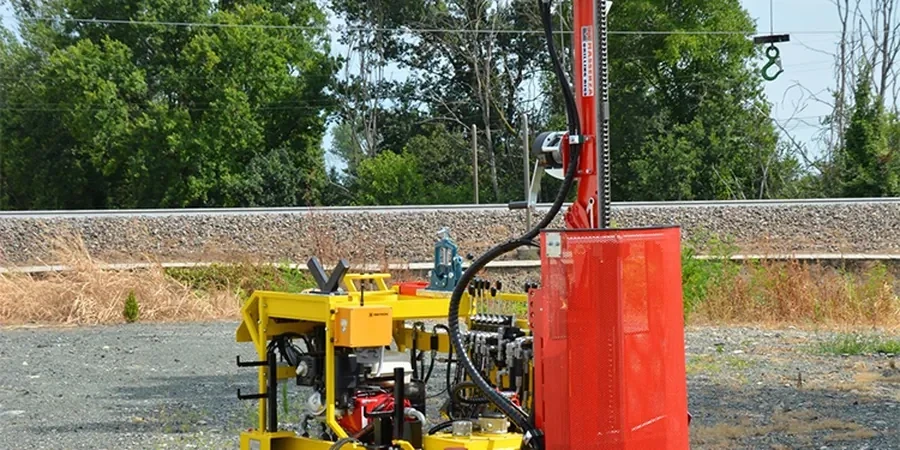
Projects that demand this level of investigation range from single-family residential foundations on expansive clays to large-scale commercial developments, retaining walls, and public infrastructure. An exploratory test pit is often the first step for shallow investigations, allowing direct visual inspection of soil stratigraphy and collection of bulk samples. For deeper profiling and continuous data, CPT (Cone Penetration Test) provides high-resolution measurements of tip resistance and sleeve friction, which are invaluable for liquefaction assessment and pile design. When standard penetration data and split-spoon samples are required for correlation with traditional laboratory testing, SPT (Standard Penetration Test) drilling remains the industry benchmark, especially in the interbedded sedimentary rocks common to the area. Each method contributes a distinct layer of understanding, and a well-designed investigation program typically integrates multiple techniques to develop a complete geotechnical model tailored to the specific site and structural demands.
Common questions
When is a full geotechnical investigation required in Overland Park rather than a simple soil report?
A full investigation is typically required for any commercial, multi-family, or subdivision development, and for single-family homes in areas with known expansive soils or slopes exceeding 15%. The Overland Park building code mandates a comprehensive report prepared by a licensed geotechnical engineer whenever the design involves foundations on filled ground, structures exceeding one story, or where the allowable bearing pressure cannot be determined from published local data alone.
How deep should borings or soundings go for a typical investigation in this region?
Boring depths in Overland Park must extend through all unsuitable soils and well into competent bearing strata. For shallow foundations, this often means penetrating the full depth of the loess and residual clay until bedrock is confirmed, typically 15 to 30 feet. For deep foundations, borings must extend at least 10 to 20 feet below the anticipated pile tip elevation, with the exact depth determined by the structural loads and the variability of the limestone and shale bedrock surface.
What laboratory tests are commonly specified on samples from an Overland Park investigation?
Standard laboratory testing includes moisture content, Atterberg limits, particle-size analysis, and unconfined compressive strength on cohesive samples. Given the prevalence of expansive clays in the area, swell-consolidation and suction testing are frequently critical. For bedrock, point load or uniaxial compression tests are performed. Chemical testing for sulfates and pH is also common to assess potential degradation of concrete and steel in the local residual soils.
Can a geotechnical investigation help with stormwater management approval in Johnson County?
Yes, absolutely. Johnson County's stormwater regulations require infiltration rate data for many best management practices. Geotechnical investigations provide the subsurface permeability profiles through in-situ tests or laboratory analysis of undisturbed samples. This data informs the design of rain gardens, infiltration trenches, and detention basins, and a report that integrates geotechnical and stormwater findings streamlines the county review process significantly.