IBC Section 1803 and Overland Park Municipal Code require a subsurface investigation before you pull a building permit. In this part of Johnson County, the standard of practice is the Standard Penetration Test per ASTM D1586. We run the SPT to give you N-values that translate directly into bearing capacity and settlement estimates. Most sites around here sit on the Dennis Limestone or overconsolidated residual clays derived from the Kansas City Group, and the SPT sampler cuts through those weathered zones efficiently. Once we log the split-spoon recovery and blow counts, the report goes to your structural engineer with a test pit observation cross-reference when shallow rock is in play, so nobody gets surprised during excavation.
In Overland Park, the N-value jump from loess to shale typically happens within a 2-foot interval. Missing that transition is where foundation problems start.
How we work
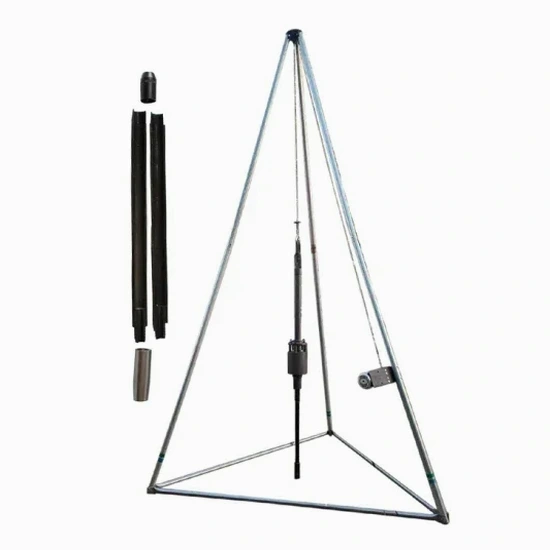
Site-specific factors
Overland Park gets 40 inches of rain a year, with May and June thunderstorms that can dump 3 inches in a few hours. That turns the surface loess into a sponge. If someone runs an SPT during a dry August, the N-values in the upper 5 feet can read 12 to 15, but the same soil in April might give N=4. We log the moisture condition on every boring log and note free water depth, so the engineer doesn't design footings off a number that only holds half the year. Another local quirk: the shale below the loess weathers to a stiff clay that holds a lot of swelling potential. SPT refusal on a hard limestone ledge at 10 feet can hide 3 feet of weathered clay above it that expands when wetted, so we always sample that transition zone separately.
Standards used
ASTM D1586-18 Standard Test Method for Standard Penetration Test (SPT) and Split-Barrel Sampling of Soils, ASTM D2487 Standard Practice for Classification of Soils for Engineering Purposes (Unified Soil Classification System), IBC 2021 Section 1803 Geotechnical Investigations, ASCE 7-22 Minimum Design Loads and Associated Criteria for Buildings and Other Structures, Overland Park Municipal Code Chapter 16.200 Building Code Amendments
Linked services
Standard SPT Borehole Package
One to six borings per site, mud rotary or hollow-stem auger, with SPT sampling every 2.5 feet and at stratum changes. Includes field log with blow counts, recovery, moisture description, and depth to groundwater. Final report with corrected N60 values, USCS classification, and bearing capacity recommendations.
SPT with Rock Coring Add-on
When SPT refusal occurs on limestone above the design bearing elevation, we switch to an NQ core barrel and recover 5 to 10 feet of rock core. The package includes RQD logging, unconfined compression estimates from point-load testing, and a combined soil-rock log that satisfies IBC 1803.5.10 for foundations bearing on rock.
Typical parameters
Common questions
How many SPT borings does Overland Park require for a single-family home?
IBC 2021 doesn't give a fixed number for residential, but the City of Overland Park typically looks for a minimum of two borings for a new single-family home, spaced to cover the building footprint. If the site shows variable soil conditions or a sloping rock profile, we usually recommend three to four borings to map the rock surface accurately. The final number depends on the structural engineer's foundation design and the building official's review.
What does an SPT test cost for a standard residential lot in Overland Park?
For a typical Overland Park residential lot with two borings to 20 feet, the SPT package runs between US$560 and US$770, depending on access, drilling method, and whether we hit refusal that requires a rock core add-on. The price includes the field work, lab classification of samples, and the geotechnical report signed by a licensed engineer.
Can the SPT tell me if my soil is expansive?
The SPT itself gives N-values and a disturbed sample, so it doesn't directly measure swell potential. But in Overland Park, the combination of SPT refusal depth, the Atterberg limits we run on the split-spoon sample from the weathered shale zone, and the moisture condition at the time of drilling gives an experienced geotechnical engineer enough to flag expansive clay risk. When the N-value drops suddenly above rock and the sample feels waxy, we almost always recommend a follow-up swell test on an undisturbed sample.
How deep do you typically drill SPT borings in Overland Park?
Most residential and light commercial borings in Overland Park go to 20 or 25 feet, or until we hit refusal on sound limestone for at least 5 feet. The IBC requires investigation to a depth where the stress increase from the foundation becomes negligible, which for a typical 2-story home on a spread footing is around 15 to 20 feet. We go a bit deeper to confirm the rock is continuous and not just a floating boulder in clay.